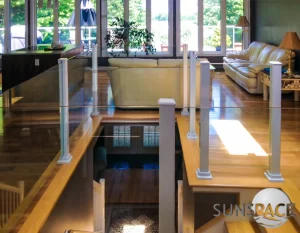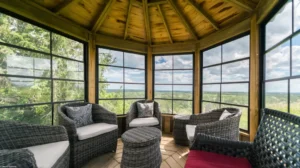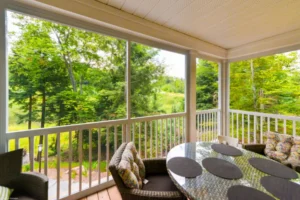
If you’ve been thinking about adding a sunroom to your Cincinnati or Dayton home, one of the first decisions you’ll face is whether to go with a 3-season or a 4-season room. Both can dramatically expand your living space and boost your enjoyment of the outdoors, but they’re built for very different lifestyles and budgets. Here’s what Southern Ohio homeowners need to know before making the call.
What Is a 3-Season Sunroom?
A 3-season sunroom is designed for use from roughly spring through fall, making it ideal for the mild months Ohio tends to do best. These rooms typically use single-pane glass or screened panels, which let in plenty of fresh air and natural light but don’t provide the insulation needed to handle Ohio winters comfortably.
Because they don’t require HVAC integration or the heavy structural upgrades of a fully insulated room, 3-season sunrooms tend to come in at a lower price point. They’re a great fit if you want a relaxing spot for morning coffee from April through October, a place to entertain during warmer months, or a bright, airy reading nook that connects you to your yard without the bugs.
What Is a 4-Season Sunroom?
A 4-season sunroom is built to be a true extension of your home’s living space, usable every month of the year, including Southern Ohio winters. These rooms use insulated dual-pane or triple-pane glass, thermally broken frames, and insulated walls, roofs, and floors to hold heat in January and stay cool in July.
They also connect to your home’s central HVAC system or use a dedicated mini-split unit, so you can maintain a comfortable temperature regardless of what’s happening outside. This additional construction complexity pushes costs higher. For a deeper look at what makes these rooms stand out, see our guide to insulated sunrooms for year-round comfort in Southern Ohio.
If you’re envisioning a home office, a playroom for the kids, a gym, or a cozy den where you can watch the snow fall without freezing, a 4-season sunroom may be the better investment.
Key Differences: 3-Season vs. 4-Season
Here’s a quick side-by-side of the most important factors:
- Usability: 3-season rooms work well from March through November. 4-season rooms can be used comfortably all year long.
- Insulation: 3-season rooms use single-pane glass with minimal insulation. 4-season rooms use insulated dual-pane glass and fully insulated walls, roof, and floor.
- HVAC: 3-season rooms rely on natural airflow and don’t connect to your home’s heating and cooling. 4-season rooms integrate with central HVAC or a dedicated unit.
- Cost: 3-season rooms typically run $25,000 to $55,000. 4-season rooms range from $35,000 to $65,000.
- Construction: 3-season rooms involve lighter structural work. 4-season rooms require more substantial framing, insulation, and permitting.
Which Is Right for Your Southern Ohio Home?
The right choice really comes down to how you plan to use the space and what your budget allows.
A 3-season sunroom tends to be the better fit if:
- You want a lower upfront investment
- Your primary use is spring through fall entertaining or relaxing
- You prefer a lighter construction process with less disruption to your home
A 4-season sunroom may be worth the added cost if:
- You want a space you can use during Ohio’s cold winters
- You’re adding a home office, gym, or dedicated living area
- You want to maximize your home’s livable square footage and long-term investment
It’s also worth considering Ohio’s climate specifically. Cincinnati and Dayton winters can bring extended cold snaps, heavy snow, and temperatures that drop well below freezing for weeks at a time. If you’re spending money on a sunroom addition, many Southern Ohio homeowners find that upgrading to a 4-season room gives them far more usable months and better long-term value.
PaltekPro Installs Both in Cincinnati and Dayton
At PaltekPro, we install both 3-season and 4-season sunrooms for homeowners across the Cincinnati and Dayton area. Our team can walk you through the options that make sense for your home, your budget, and how you want to use the space. Not sure what the installation process looks like? Our guide on what to expect from a sunroom installation in Southern Ohio covers the full process from consultation to completion.
Request a free quote and one of our team members will be in touch to discuss your project.
Frequently Asked Questions
Can a 3-season sunroom be converted to a 4-season later?
In some cases, yes, but it can be costly. A conversion typically requires upgrading the glass, adding insulation to the walls and roof, and integrating heating and cooling. In many cases, it may be more cost-effective to plan for a 4-season room from the start if you think year-round use is something you’ll want down the road.
How long does a sunroom addition take to install?
Most sunroom installations take anywhere from a few days to a few weeks depending on the size of the room, the complexity of the project, and weather conditions. PaltekPro can give you a more accurate timeline once we’ve assessed your specific project.
Do 4-season sunrooms add value to a home?
A well-built 4-season sunroom can add usable square footage and appeal to potential buyers, particularly in Southern Ohio where year-round living space is desirable. The exact impact on resale value depends on the quality of construction and how well it blends with the rest of the home.
What is the difference between a 3-season room and a screened porch?
A screened porch uses screen panels instead of glass, which means it provides bug protection and shade but no real weather protection. A 3-season sunroom uses glass panels or windows that can be opened or closed, giving you more flexibility and a more finished indoor feel. A screened porch tends to be less expensive but also less versatile. For a full breakdown of the two options, see our post on screen rooms vs. 3-season sunrooms.