If you’ve been thinking about adding a sunroom to your Cincinnati or Dayton home, one of the first decisions you’ll face is whether to go with a 3-season room or a fully insulated 4-season sunroom. For a lot of Southern Ohio homeowners, that decision comes down to one question: do you want a space you can use a few months of the year, or one you can use every single day?
An insulated sunroom answers that question definitively. It’s a year-round room: comfortable in July heat, usable on a cold February morning, and genuinely livable in between. Here’s what you should know before you decide.
What Makes a Sunroom “Insulated”?
Not every sunroom is built to handle Ohio winters. A standard 3-season room uses lighter panels and single-glazed windows that aren’t designed to retain heat when temperatures drop. An insulated sunroom is a different category of construction entirely.
PaltekPro builds insulated sunrooms engineered specifically for year-round performance in climates like ours. Key features include:
- Three-inch foam-insulated wall panels with heavy-duty aluminum extrusions that handle wind and snow loads
- Commercial-grade thermal breaks in the extrusions that reduce condensation and heat loss
- High-efficiency Low-E Argon gas glass windows that provide an additional layer of protection from the elements
- Optional ThermaDeck insulated floor system that eliminates costly foundation work and may provide better insulation than standard flooring
Together, these features create a room that holds temperature the way a well-built interior room does. It’s not a space that’s livable only when the weather cooperates, but one that’s genuinely comfortable year-round.
Why Insulation Matters in the Cincinnati and Dayton Area
Southern Ohio doesn’t have mild winters. The Cincinnati and Dayton area sees cold snaps, extended stretches below freezing, and plenty of grey, damp days that make an under-insulated sunroom feel anything but inviting. A 3-season room in this climate often sits unused from November through March, which is a five-month window where you’re paying for space you can’t use.
An insulated 4-season sunroom changes that. The thermal wall system and high-efficiency glass can help hold heat in winter and keep the space cooler in summer when connected to your home’s HVAC system. You get the natural light and outdoor connection of a sunroom with the climate control of a proper room addition.
How Southern Ohio Homeowners Use Their Insulated Sunrooms
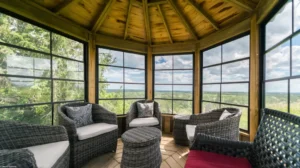
Because an insulated sunroom functions as a true extension of your home’s living space, how you use it is really up to you. Some of the most common uses we see in Southern Ohio are:
- Everyday living space. A bright, comfortable room for reading, working from home, or relaxing that feels connected to the outdoors without being in it
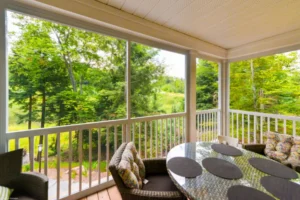
- Dining and entertaining. A year-round dining room or gathering space that’s separate from the main house but fully conditioned
- Home office. Natural light and a bit of separation from the rest of the home make insulated sunrooms a popular option for remote workers
- Plant room or garden space. The light and temperature stability make it an ideal environment for keeping plants through the winter
- Exercise or hobby space. A dedicated room with good light and comfortable temperature control for yoga, fitness equipment, or creative projects
Because the space is fully conditioned, it can be furnished and used the way any other room in your home is. No setting up and breaking down seasonally.
Insulated Sunroom vs. 3-Season Sunroom: The Key Differences
If you’re weighing both options, here’s a straightforward comparison of what separates them.
Wall panels: A 3-season room uses 2-inch foam panels. An insulated sunroom uses 3-inch panels with commercial-grade thermal breaks. That inch of difference matters significantly when it’s 20 degrees outside.
Glass: 3-season rooms typically use single-glazed or vinyl panels. Our Insulated sunrooms use high-efficiency Low-E Argon gas glass designed to hold temperature.
HVAC connection: A 3-season room is usually not connected to your home’s heating system. An insulated sunroom is designed to accommodate your existing HVAC or a dedicated heating and cooling solution.
Usable months: A 3-season room in Southern Ohio is comfortable from roughly April through October. An insulated sunroom is designed for use every month of the year.
Investment: An insulated sunroom is a more substantial investment due to the construction and materials involved. Whether that investment makes sense depends on how you plan to use the space and for how many months of the year.
Best for: Homeowners who want year-round use, full climate control, and a space that functions as a true extension of the home’s living area.
Frequently Asked Questions
Can a sunroom be used all year round?
Yes, but only if it’s built for it. A 3-season sunroom is designed for spring through fall use and isn’t insulated for winter. A fully insulated 4-season sunroom is built to be comfortable in any weather, including through the cold months Southern Ohio is known for. The key factors are wall panel insulation, window glass quality, and connection to a heating and cooling system.
Can an insulated sunroom be heated in winter?
Yes. Insulated sunrooms are designed to connect to your home’s existing HVAC system or accommodate a dedicated heating and cooling unit. Combined with the thermal wall panels and Low-E Argon gas glass, the space can maintain comfortable temperatures even during Southern Ohio winters.
How much does an insulated sunroom cost in Cincinnati or Dayton?
Cost depends on the size of the space, your home’s existing structure, and the materials and options you choose. An insulated 4-season sunroom is a more substantial investment than a 3-season room, and both vary depending on your specific project. The best way to get an accurate number is to schedule a free consultation. PaltekPro will assess your space and provide a detailed quote with no obligation.
What does a 3-season sunroom cost compared to an insulated sunroom?
A 3-season sunroom is generally the more accessible entry point, while a fully insulated 4-season sunroom involves more construction complexity and materials, which is reflected in the investment. The right choice depends on how you plan to use the space and for how many months of the year.
Is an insulated sunroom worth it compared to a 3-season room?
It depends on how you plan to use the space. If you want seasonal use from spring through fall, a 3-season room may be the right fit. If you want a room you can use every day of the year, including through Cincinnati winters, an insulated sunroom delivers that in a way a 3-season room simply cannot.
Can I convert my existing porch into an insulated sunroom?
In many cases, yes. Converting an existing covered porch into a 4-season sunroom is one of the most common projects PaltekPro handles. Whether your existing foundation and framing can be reused depends on the specific structure. We’ll assess that during your consultation. You can also explore our porch conversion options to see what’s possible for your space.
Ready to Add a Year-Round Sunroom to Your Home?
PaltekPro installs custom insulated sunrooms for homeowners throughout the Cincinnati and Dayton area. If you’re ready to stop losing five months of outdoor living to the Ohio winter, we’d love to talk through what’s possible for your home.
Schedule your free sunroom consultation today. No pressure, no obligation. Just a clear conversation about what a year-round sunroom could look like for your home.